Pavel KrutskoSenior Product Designer

Experience in design6y:1m:11d

Case study 04 — Yachtswaps

Designing trust between strangers swapping yachts

A platform where yacht owners travel the world by swapping boats with each other — Airbnb-style trips for people who own very expensive things.

Role
Product Designer
Scope
Search, swap flow, office area, design system
Platform
B2C responsive web app + landing page
Timeline
Oct 2022 – May 2023 · Iguana
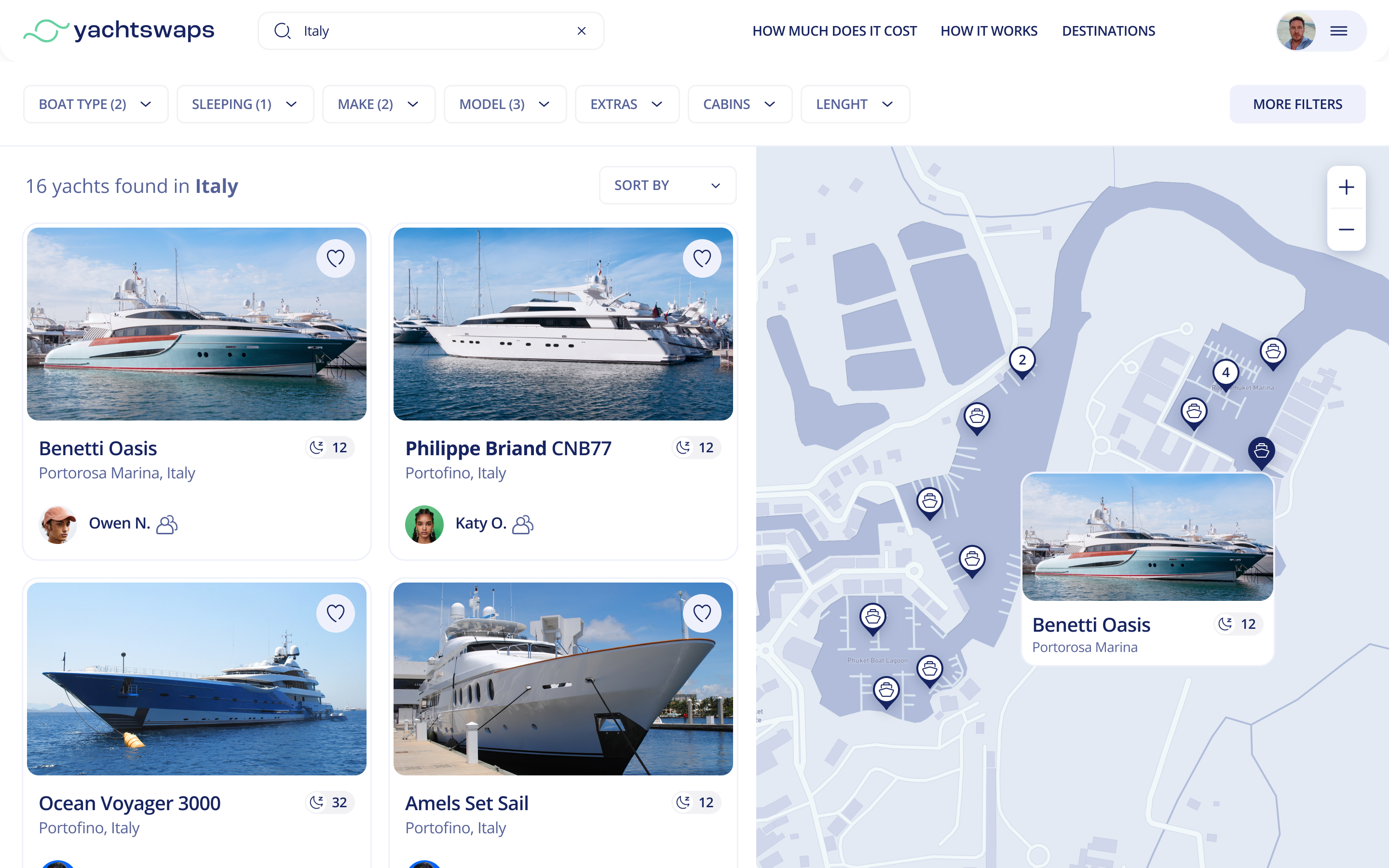
Yachtswaps search: boats in Italy as cards next to a map with price pins

01 — Problem

Yachts sit idle most of the year, and renting one abroad is expensive and complex. There was no safe way for owners to swap boats with each other.

02 — My part

Designed the product end to end: landing, search and boat pages, the swap flow, check-in and check-out, the office area and the design system.

03 — Outcome

A full product where every risky moment of a swap — first contact, dates, handover — has its own clear step and status.

Context

Owners have boats, not time — and no one to share them with.

  1. 01

    Idle boats

    A yacht costs money every month, but its owner uses it only a few weeks a year.

  2. 02

    Expensive charters abroad

    Sailing somewhere new means renting a boat — costly and logistically complex.

  3. 03

    No place to swap

    Owners had no dedicated platform to find each other and agree on an exchange.

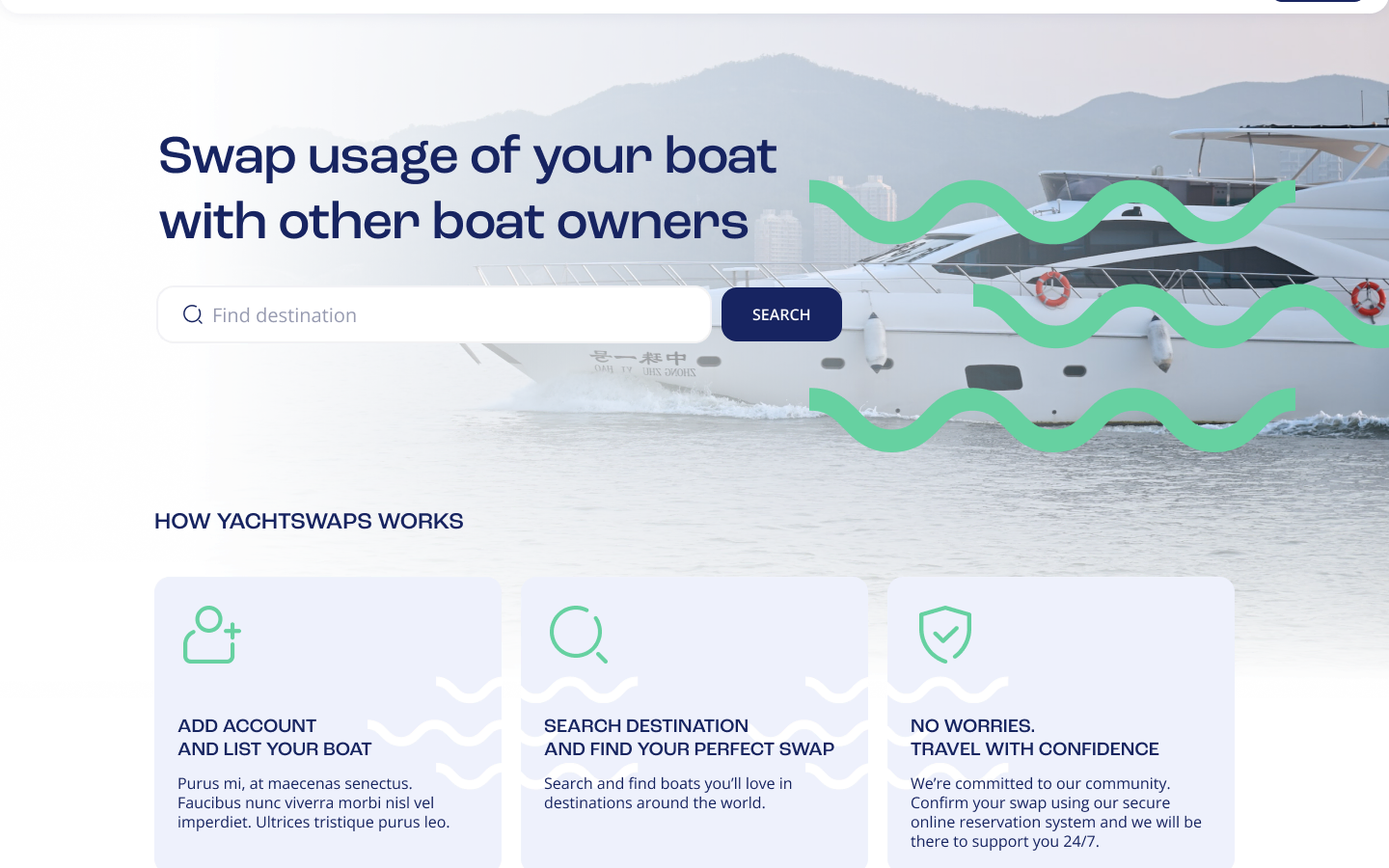
Landing — swap usage of your boat
Landing page: “Swap usage of your boat with other boat owners” with a destination search

Users

Every owner is a host and a guest.

01 — Lends a boat

Host

Lists a yacht, sets availability and accepts or declines swap requests.

02 — Borrows a boat

Guest

Finds a boat by destination, sends a swap request and plans the trip.

03 — In every swap

Swap partners

Each owner is both at once: my boat for yours, my dates for yours.

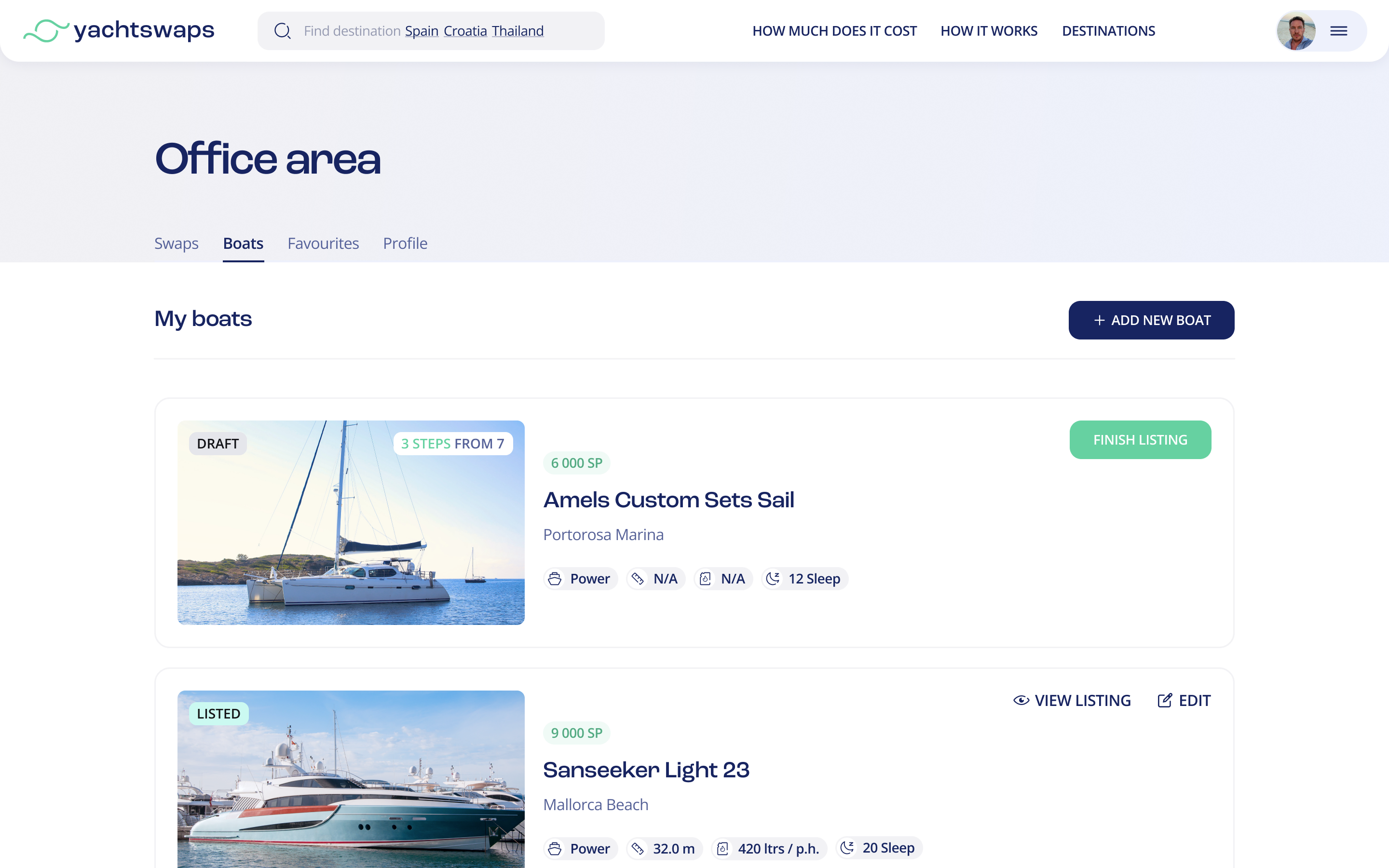
Owner — office area, my boats
Office area: the owner’s boats with draft and listed statuses

The core challenge

Trust vs. friction.

A swap meansOwners needSo the design…
Handing a multi-million boat to a stranger.To know who they’re dealing with before sharing anything.Starts with a connection request and a profile; contacts open only after it’s accepted.
Two trips, two boats, two sets of dates.To agree on dates without endless messaging.Lets each side approve or edit the other’s trip dates in one stepper.
The boat comes back after someone else used it.Proof of its condition before and after.Records the boat’s state at check-in and check-out, side by side.

Design decisions

Three decisions that made a swap feel safe.

Decision 01 / 03

A swap is a step-by-step handshake

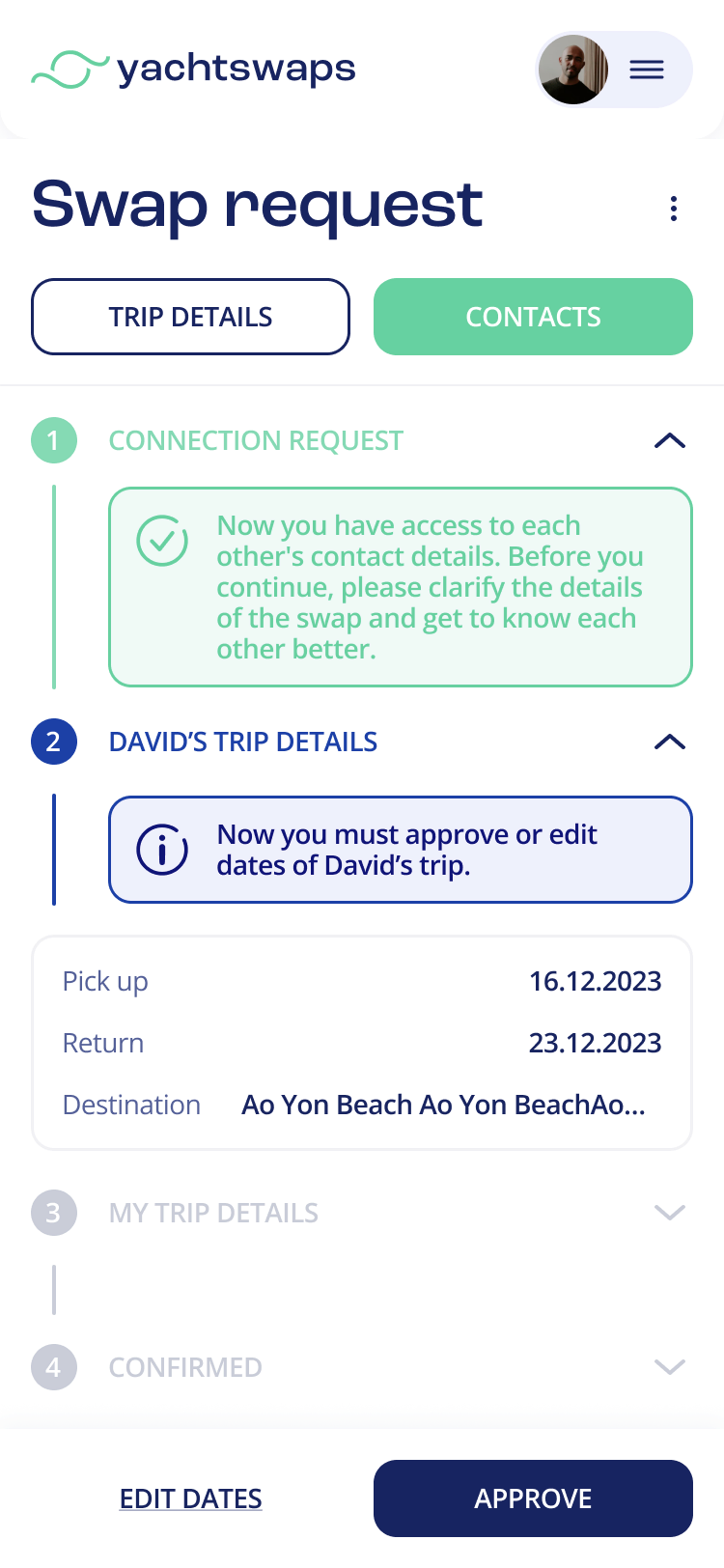
Swapping yachts means two owners committing to a high-value exchange. I structured the request around gradual commitment — connection request, their trip, my trip, confirmed — contacts open only once interest is mutual, and every step makes the next one explicit.
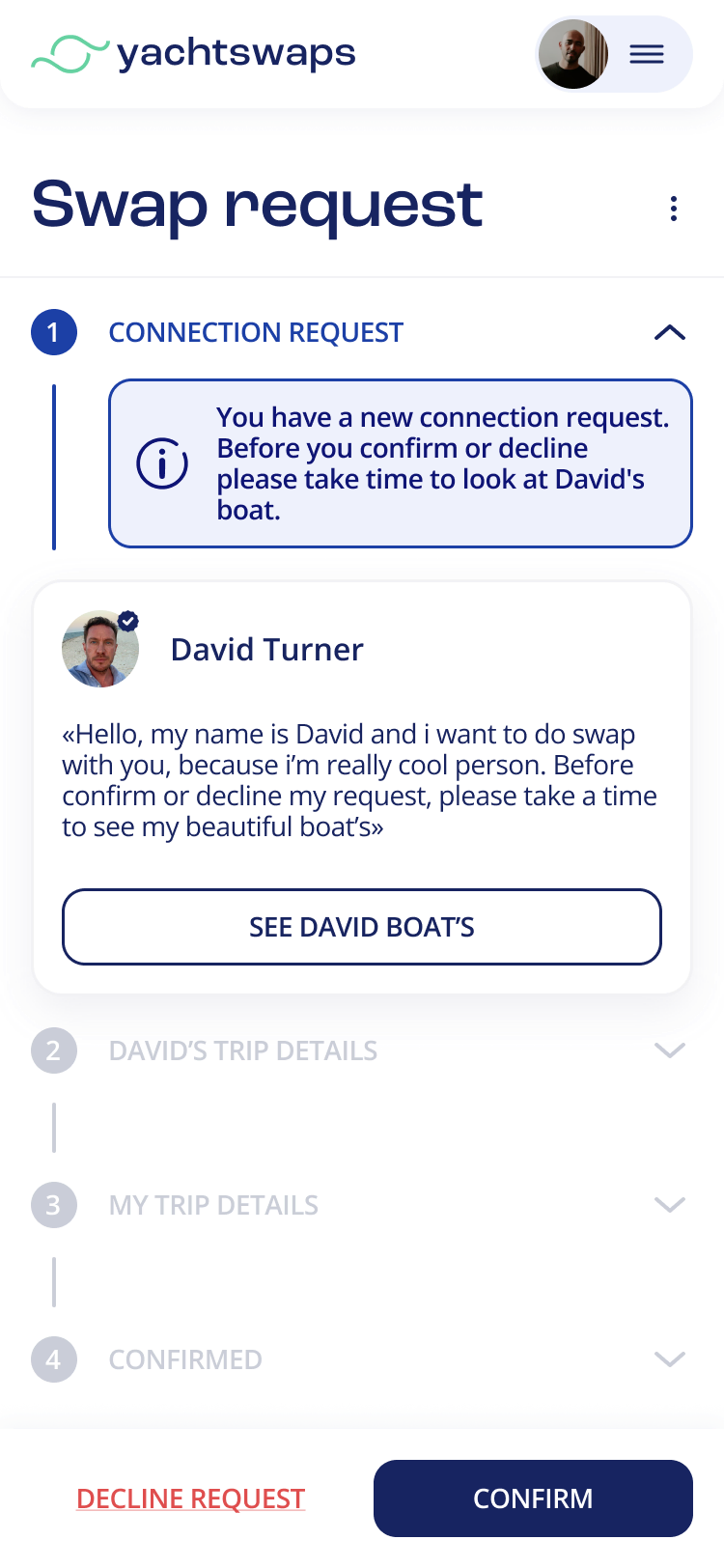
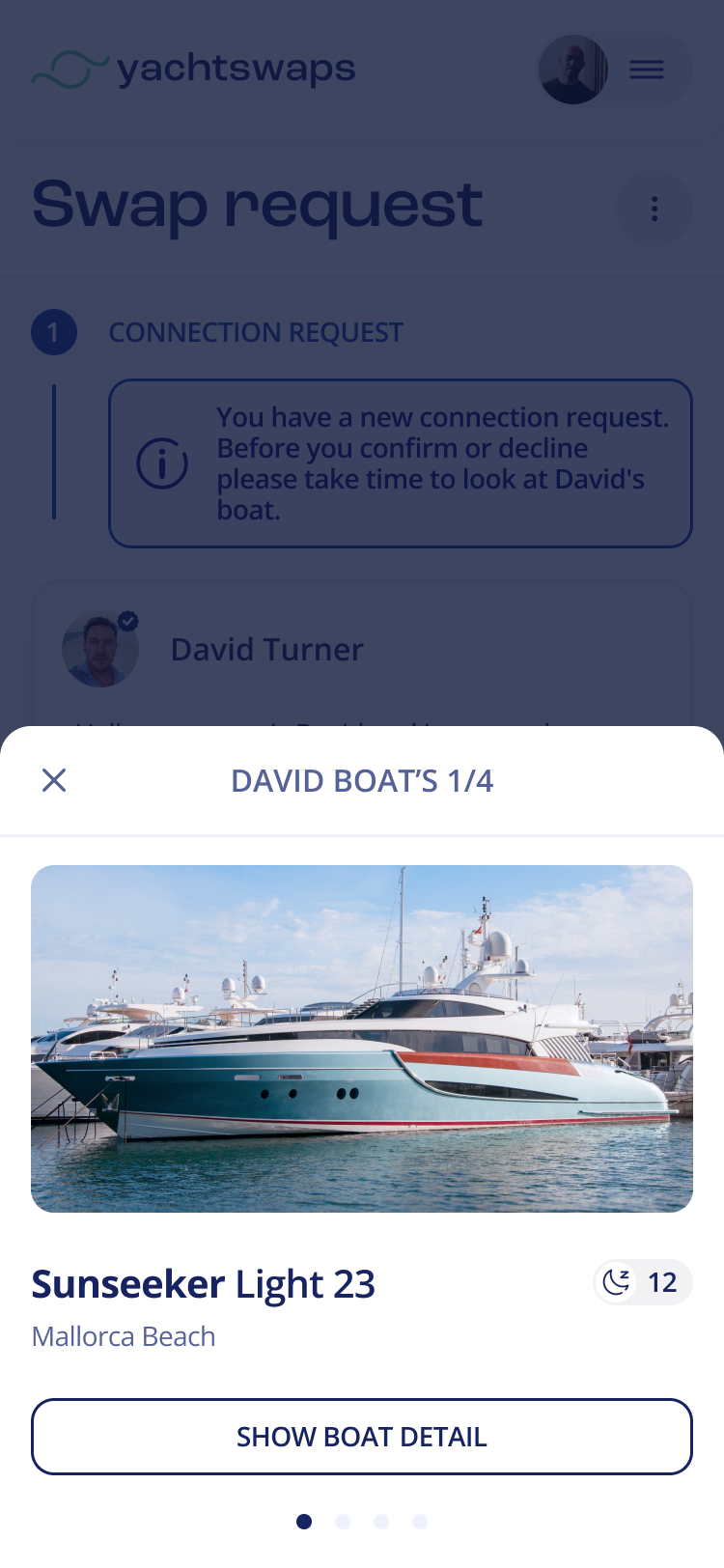
Swap request — step 1 & step 2
Swap request, step 1: a connection request from another owner
Swap request, step 1: browsing the other owner’s boats
Swap request, step 2: approving the dates of their trip

Decision 02 / 03

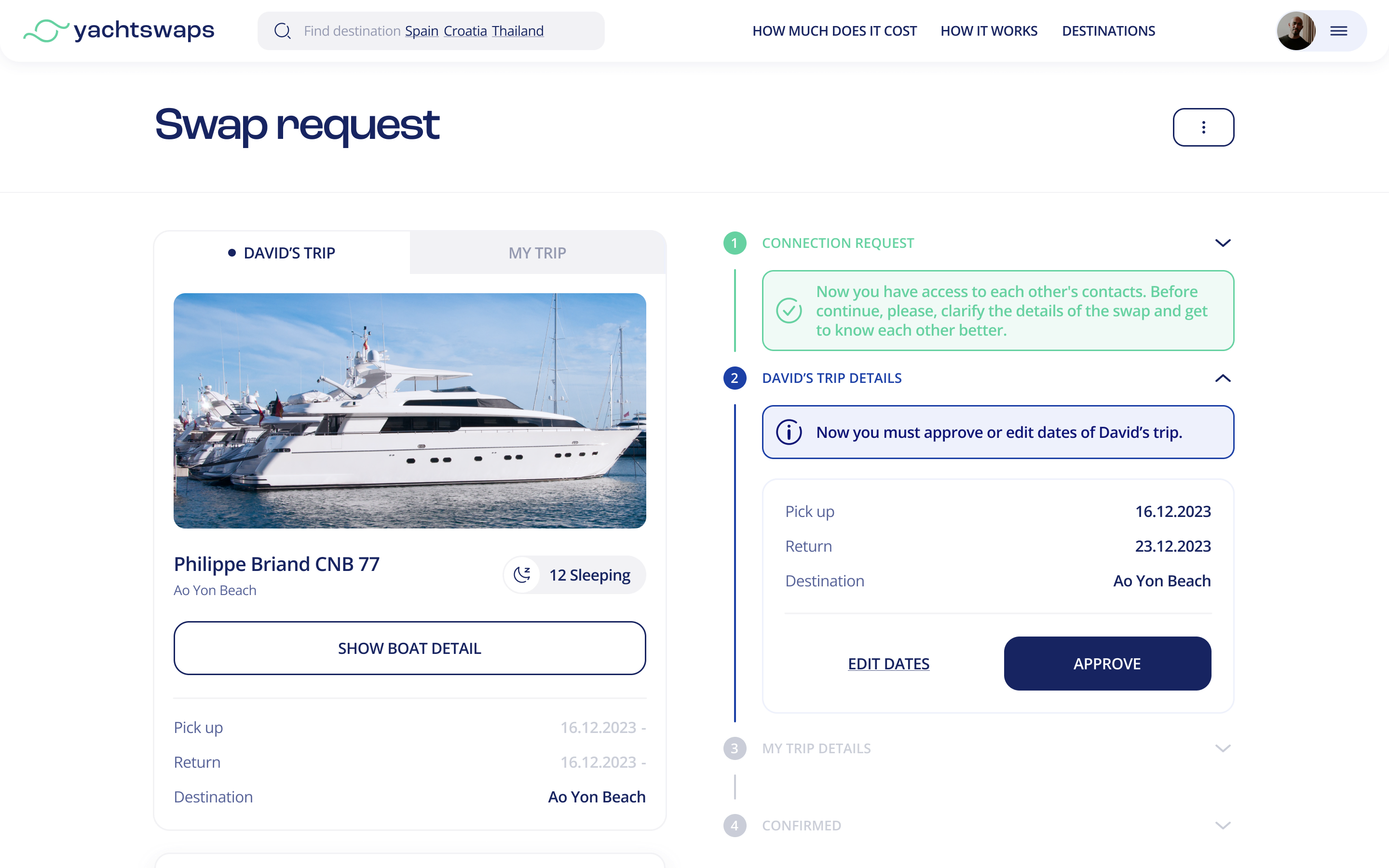
Both trips in one place

Each owner sees the other’s trip and their own side by side — boat, destination, dates — and approves or edits dates without leaving the flow.

Swap request — David’s trip
Swap request on desktop: the other owner’s trip with pick-up and return dates to approve

Decision 03 / 03

Before and after, on record

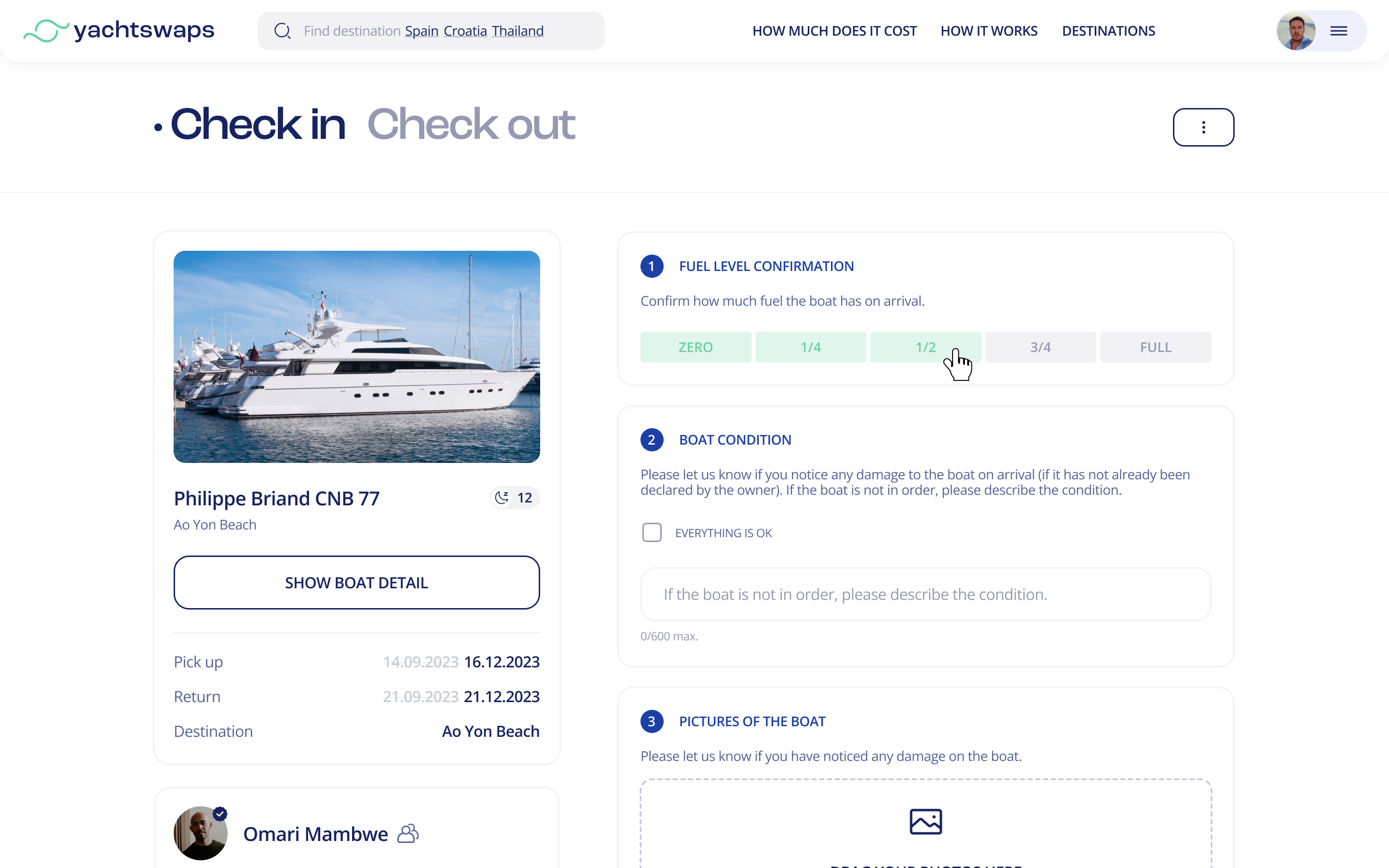
Check-in and check-out capture the boat’s condition at handover and on return, so both owners share the same record if something goes wrong.

Check-in — boat condition before the trip
Check-in: fuel level, boat condition and photos recorded before the trip

Discovery

Finding a boat feels like planning a trip.

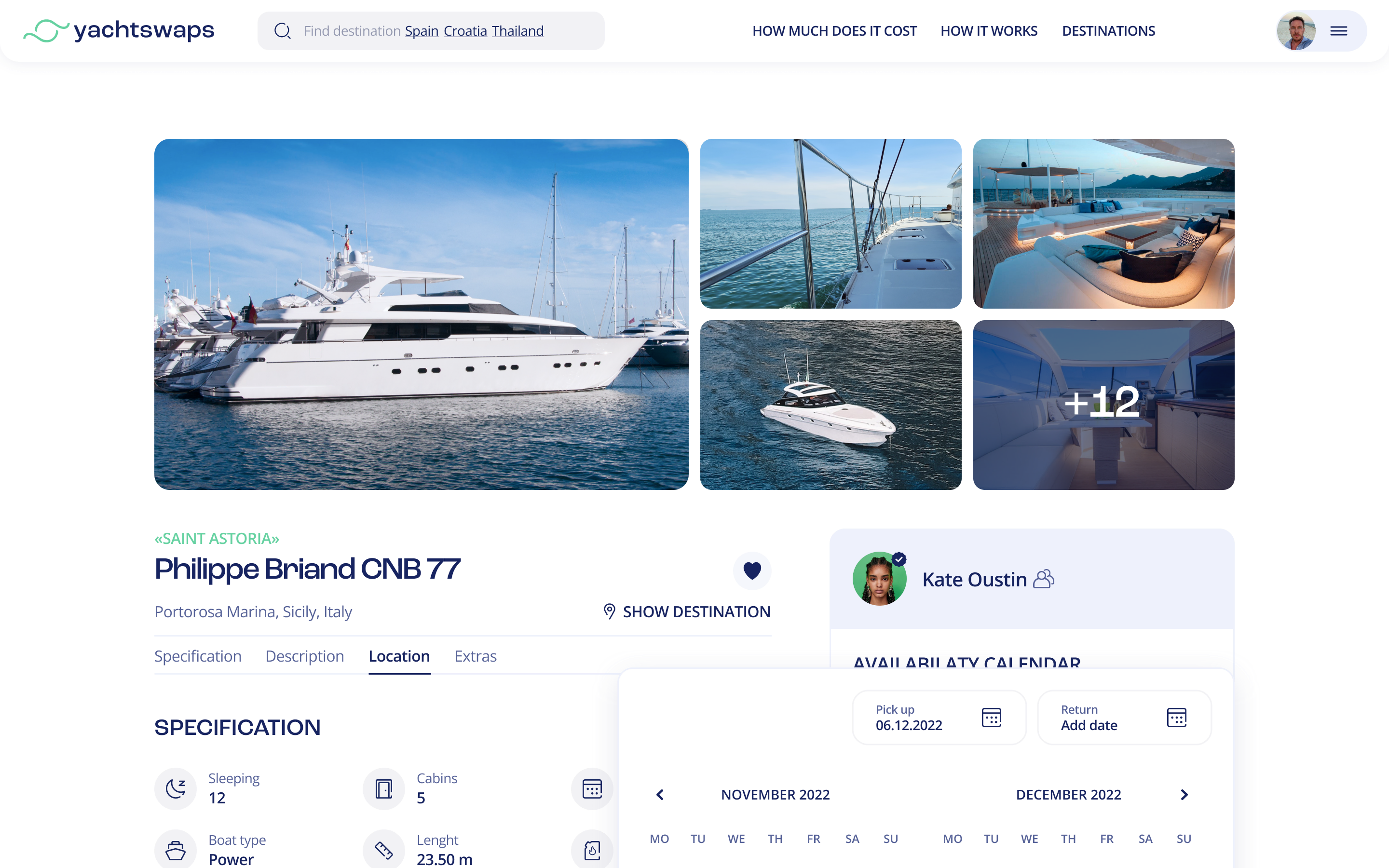
Search starts from a destination, with filters and a map; every boat page leads with photos, availability and its owner.

Guest — boat detail
Boat detail page with a photo gallery, specification and availability calendar
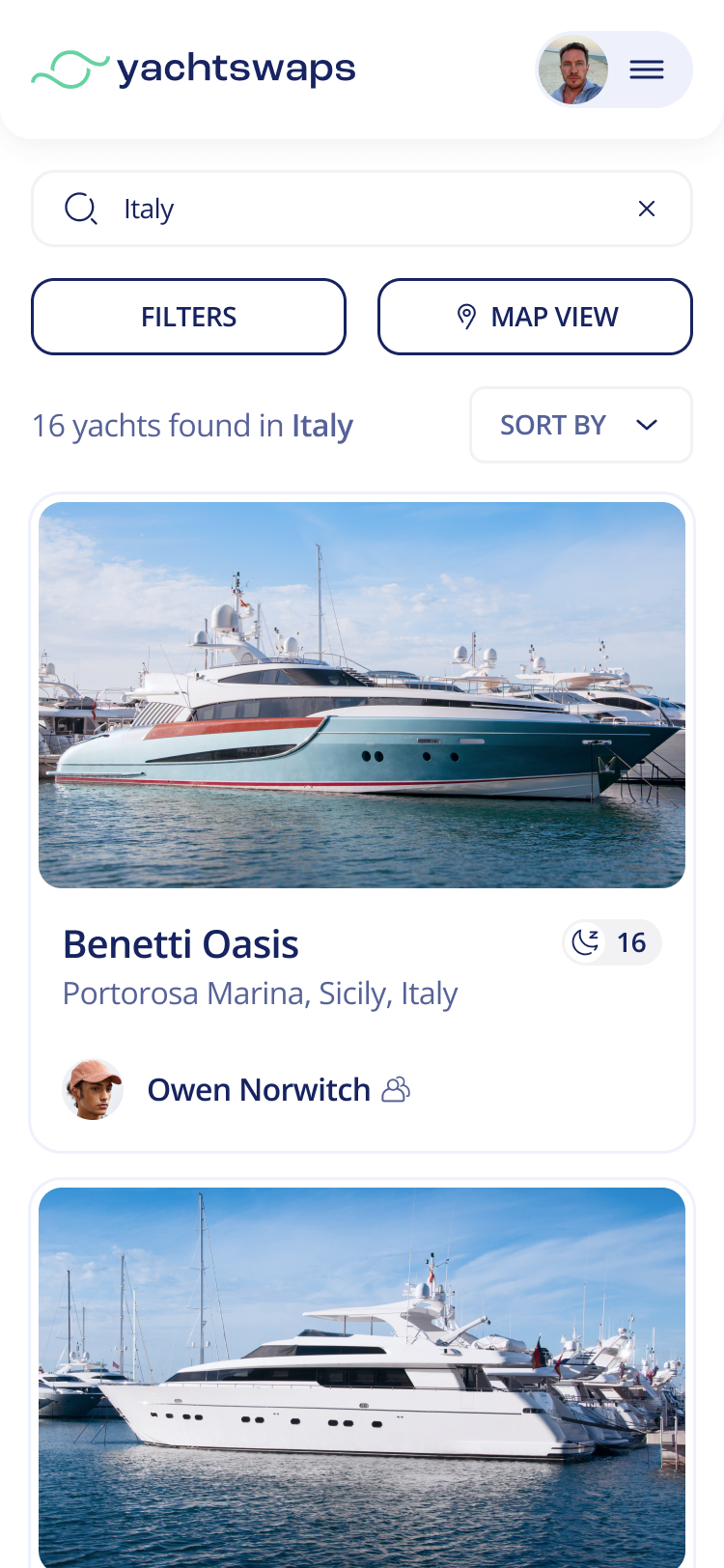
Guest — search, mobile
Search results on a phone with filters and a map view toggle

Design system

One language for web and mobile.

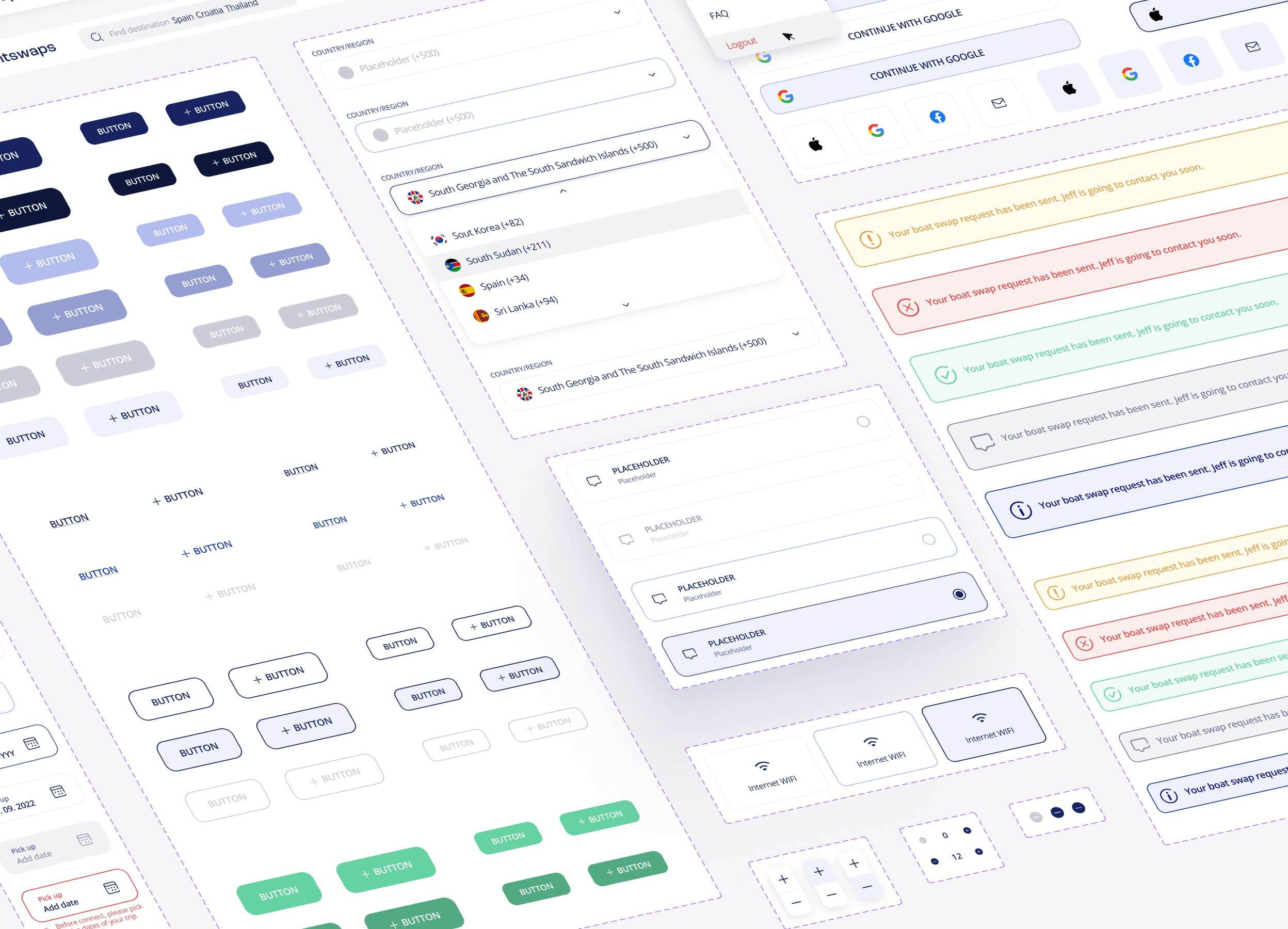
A shared component set keeps search, the swap flow and the office area consistent — cards, forms, statuses and an icon set drawn for boats.

Components — cards, forms, statuses, icons
Component sheet with buttons, selects, inputs, notifications and icons

Outcome

A complete product, designed end to end.

  1. 01

    End-to-end product

    Landing, search, boat pages, swap flow, office area and admin — designed and walked through with the developers.

  2. 02

    Trust built into the flow

    Every risky moment of a swap has its own step and status, so owners always know where they stand.

  3. 03

    One system, two screens

    Responsive patterns and shared components keep desktop and mobile consistent.