


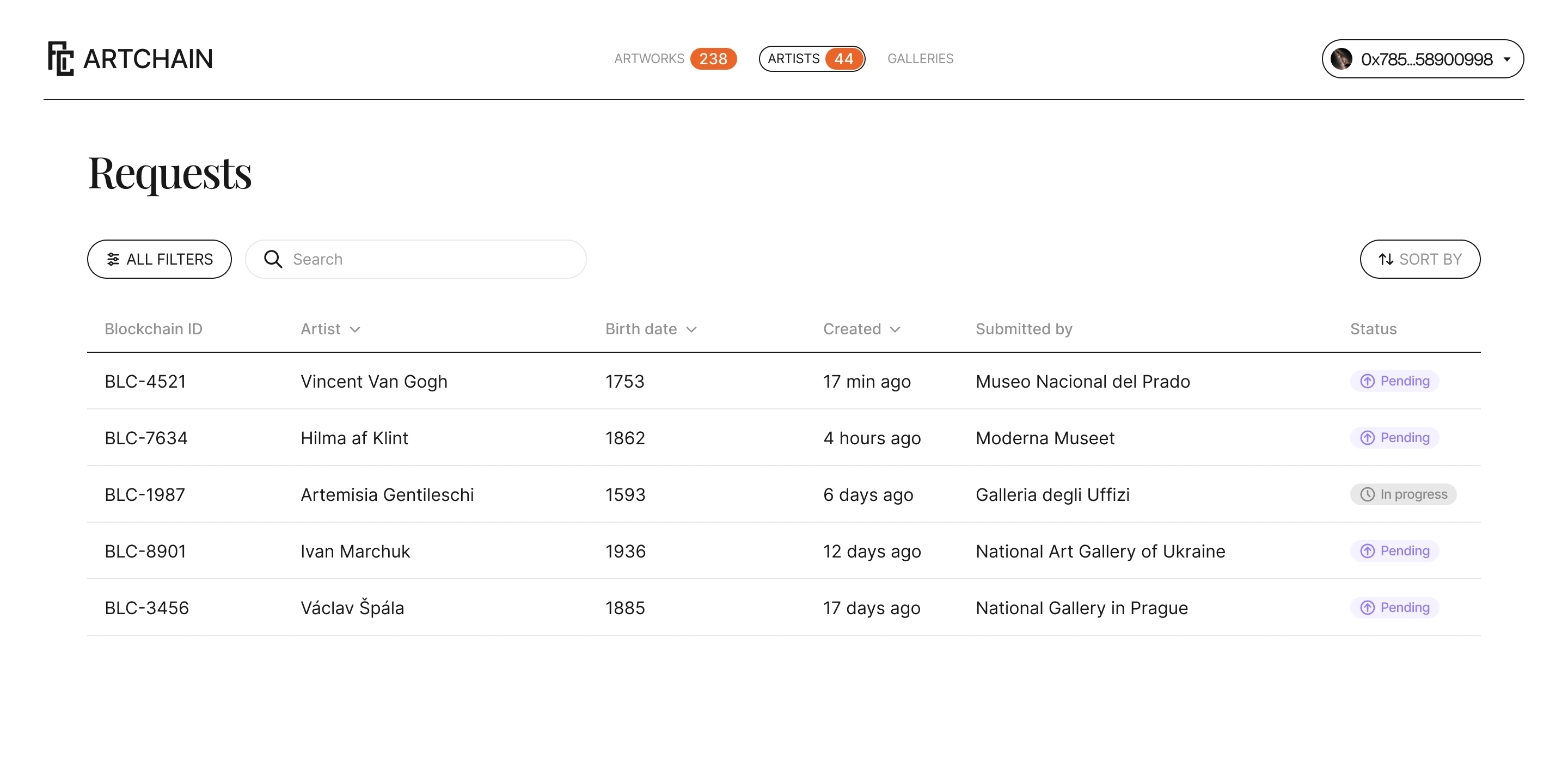
Decision 01 / 04
Verification lives apart from inventory
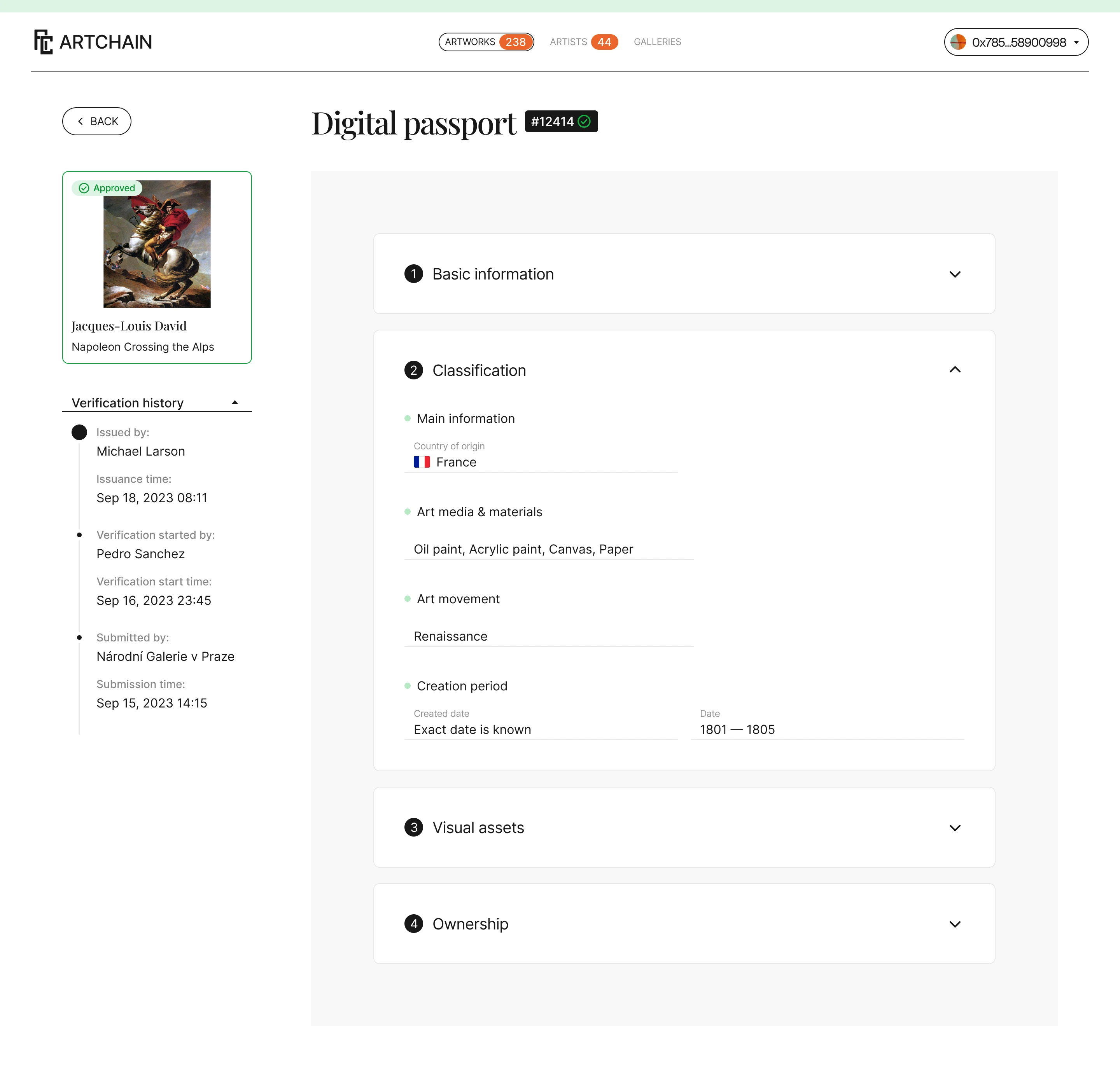
Verifiers work from a dedicated request queue. After testing, the full verification history moved into the digital passport — right next to Approve / Decline.
 Pavel KrutskoSenior Product Designer
Experience in design6y:0m:20d
Case study 02 — Artchain
A blockchain platform where museums and galleries manage, verify and protect artworks — built for people who are experts in art, not in crypto.
01 — Problem
Art records lived on paper and in emails. Provenance was checked by calling previous owners; authentication took days to weeks.
02 — My part
Led design from discovery to delivery: roles and access, business verification, inventory, artwork verification, marketplace, design system.
03 — Outcome
One platform where verification is a structured, auditable workflow — and trust is visible to everyone, down to the buyer.
Context
Losable, forgeable and easy to alter without anyone noticing.
Every gallery and institution kept its own records in its own format.
Settling who owns a work could take legal proceedings.
Users & roles
01 — Inside the museum
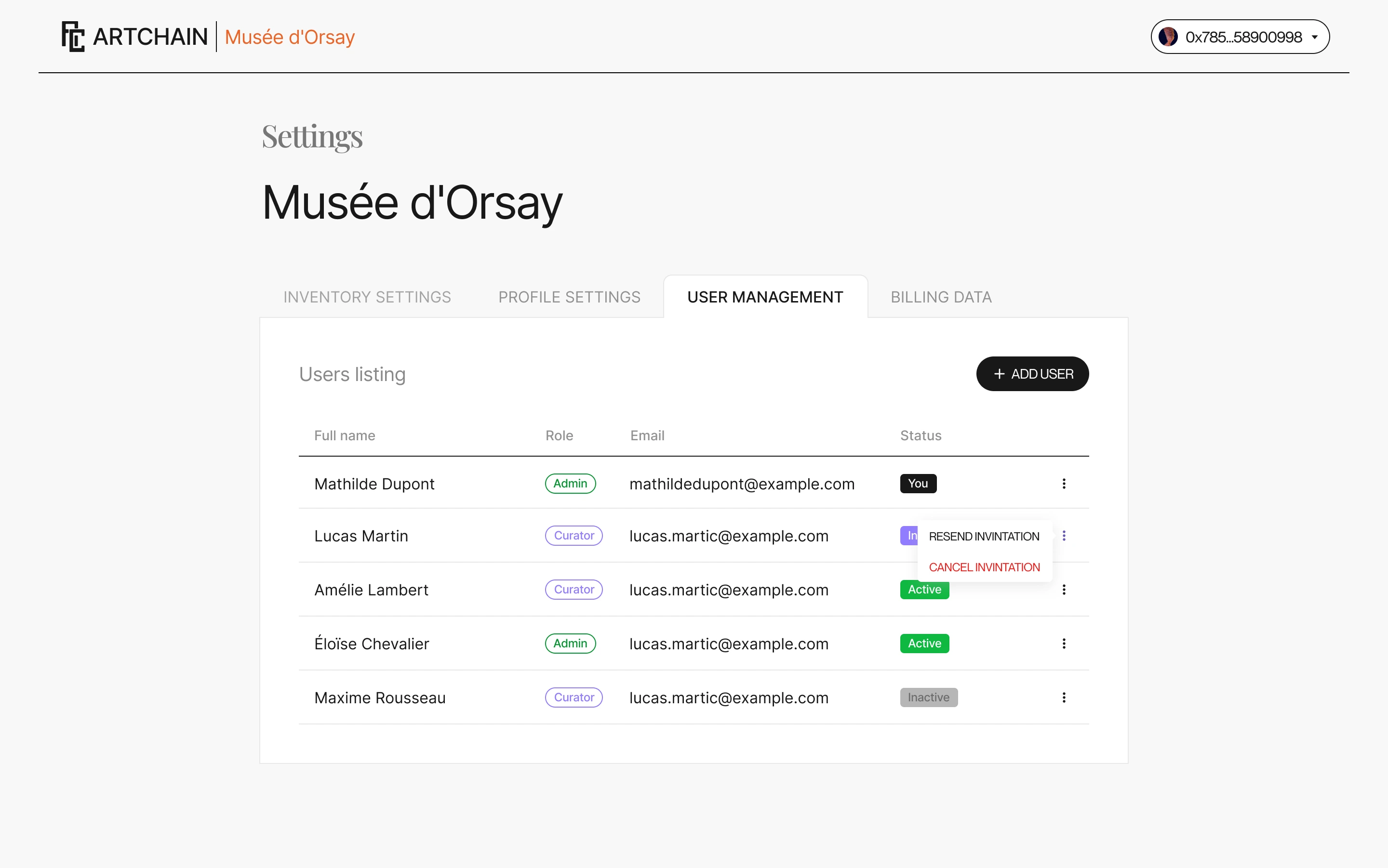
Invites curators, assigns roles, manages billing and passes business verification.
02 — Inside the museum
Adds artworks and artists, manages inventory and submits records for verification.
03 — Artchain
Reviews submitted records and approves or declines them.
The core challenge
| The blockchain says | People need | So the design… |
|---|---|---|
| Records are permanent once written. | Room for typos, wrong files and second thoughts. | Checks, previews and maps data before anything is recorded. |
| Identity is a wallet address and a hash. | To think in artworks, artists and statuses. | Leads with the artwork and its status; chain IDs stay available, never in the way. |
| Every signed action is irreversible. | Only the actions their role allows. | Shows each role its own actions — nothing it can’t or shouldn’t do. |
How I worked
Interviews with gallery and museum staff to map how records, certificates and provenance checks worked before Artchain.
Moderated sessions on bulk import and verification — the flows where one mistake is hardest to undo.
One component library for admin, verification and marketplace, built together with the developers.
Design decisions
Decision 01 / 04
Verifiers work from a dedicated request queue. After testing, the full verification history moved into the digital passport — right next to Approve / Decline.
Decision 02 / 04
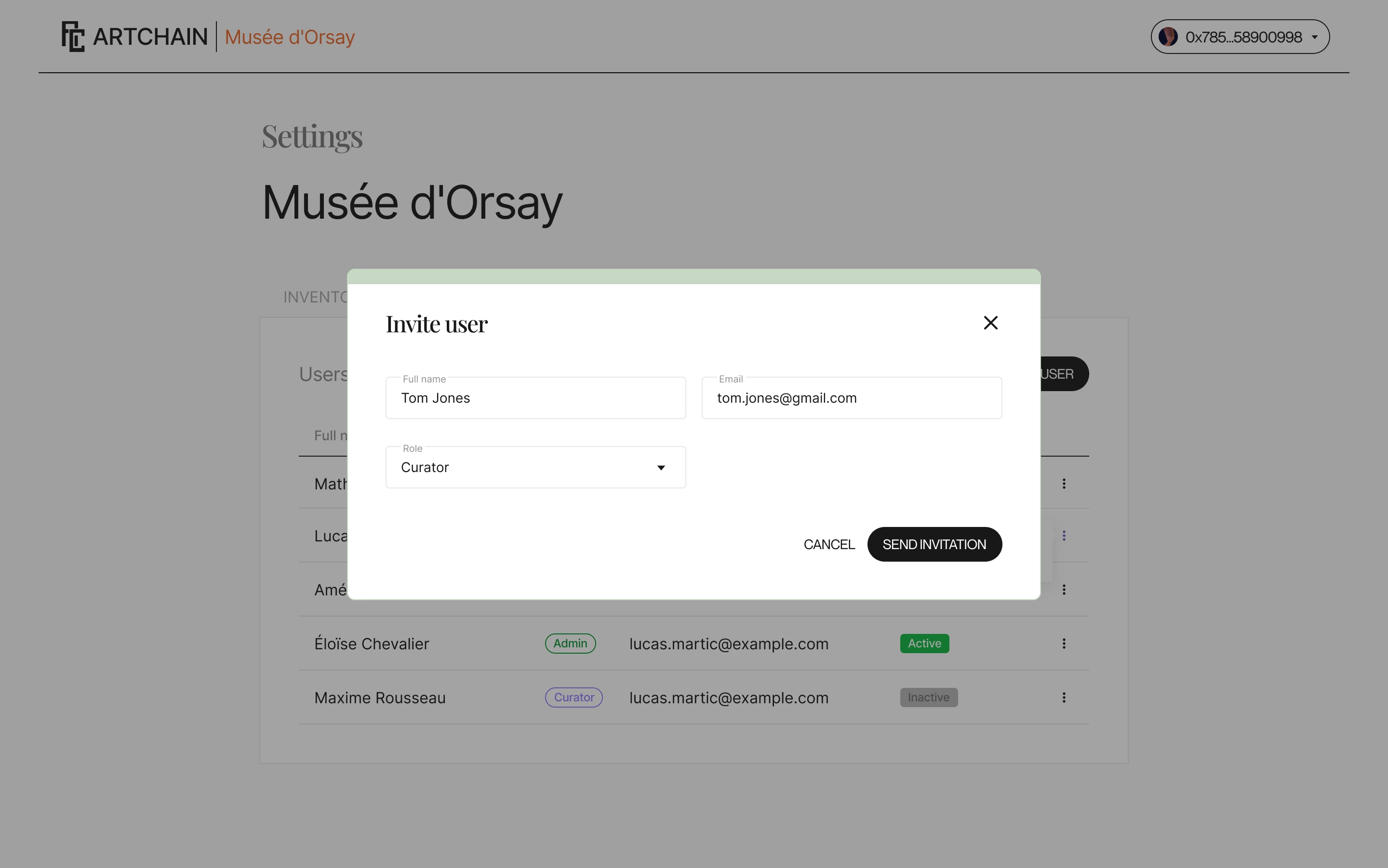
Admins invite people and assign their role. Curators manage inventory, verifiers see only requests — nobody sees an action their role can’t take.
Decision 03 / 04
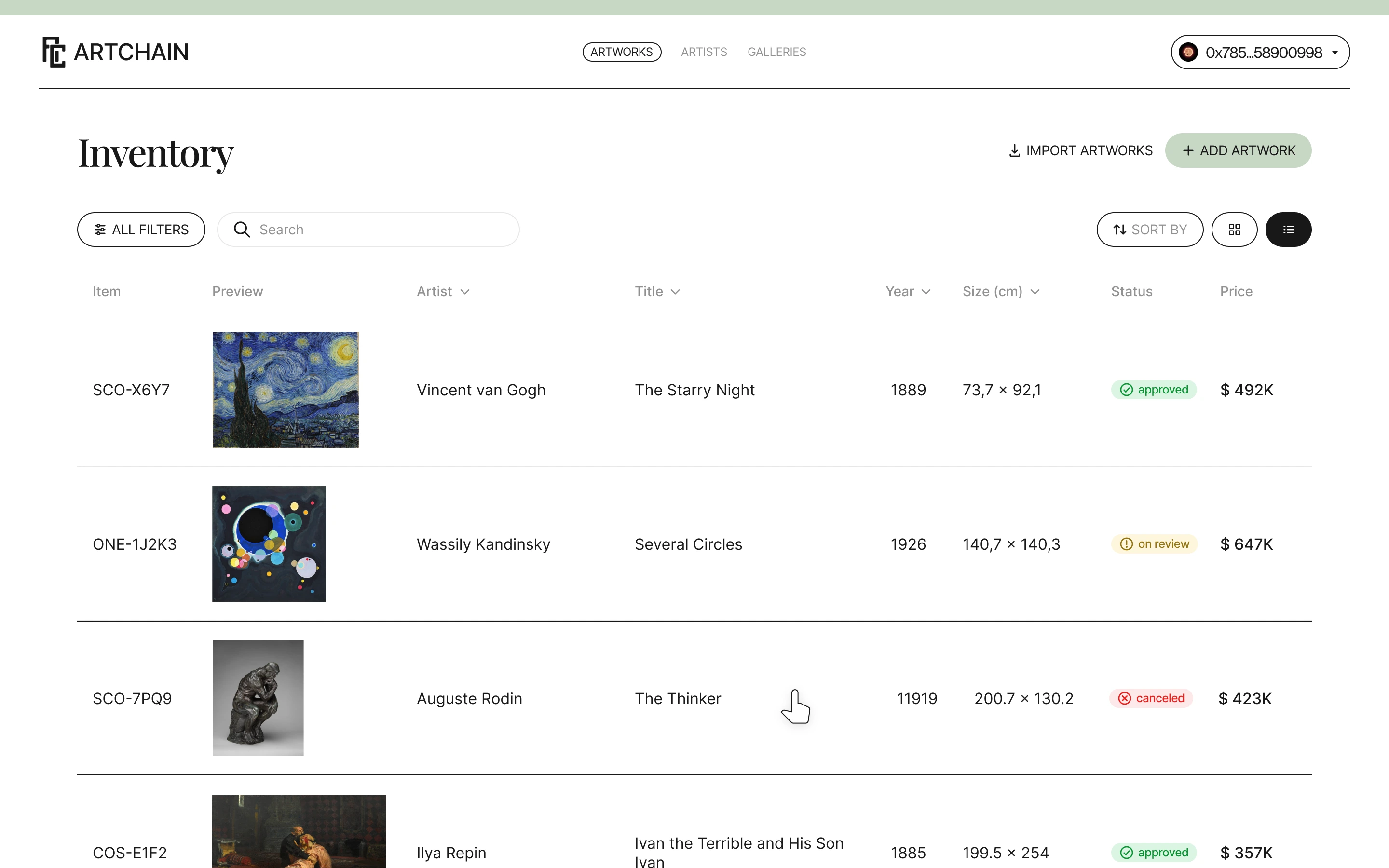
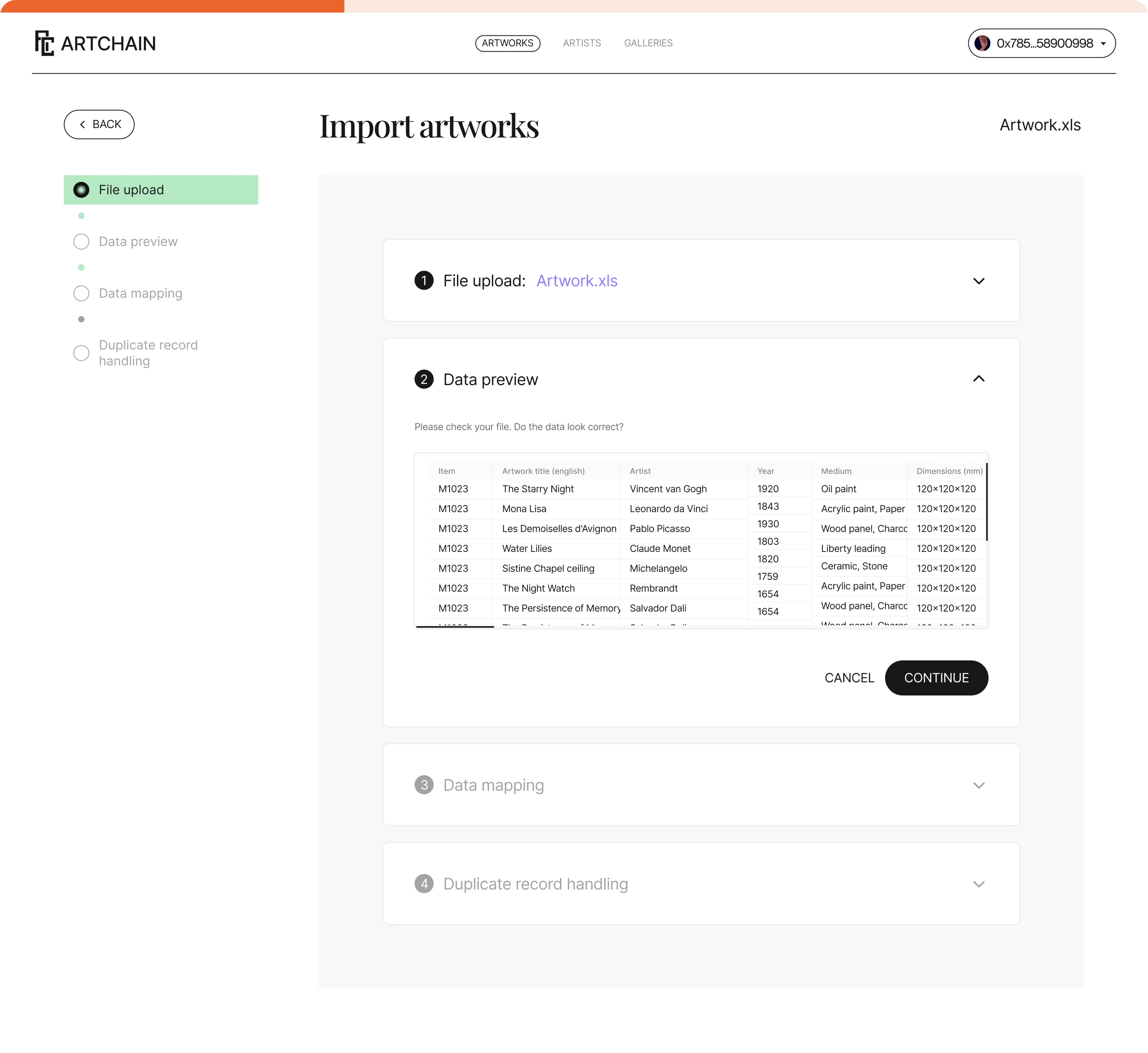
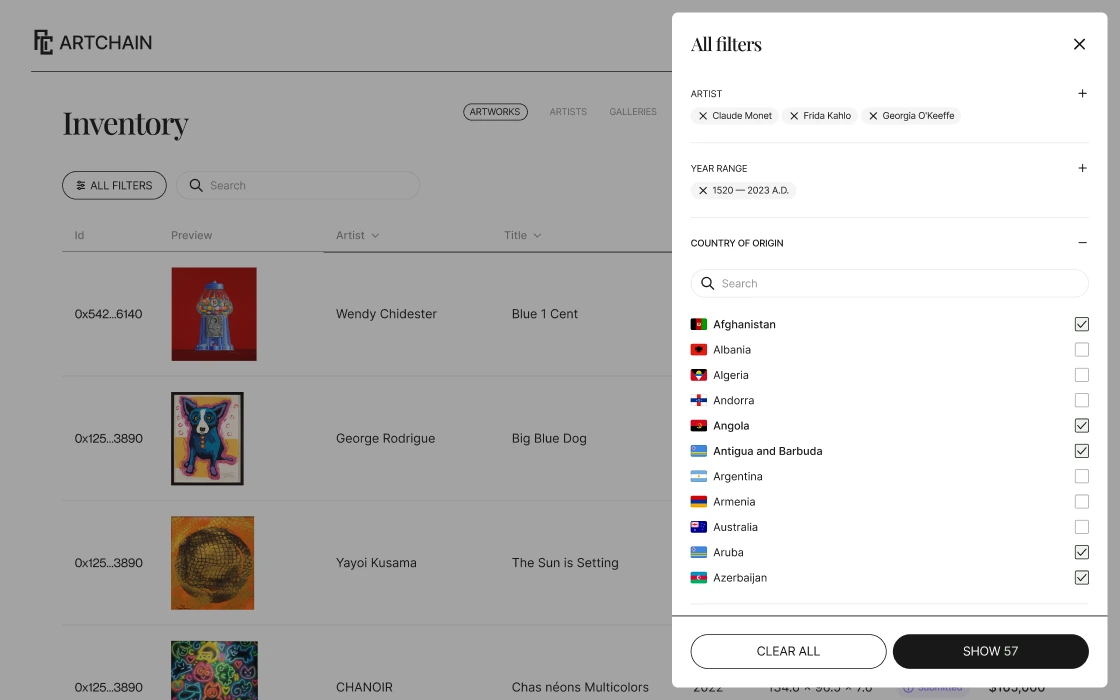
Bulk import walks through upload → preview → mapping → duplicates, so errors are caught before anything is recorded. Filters keep large collections searchable.
Decision 04 / 04
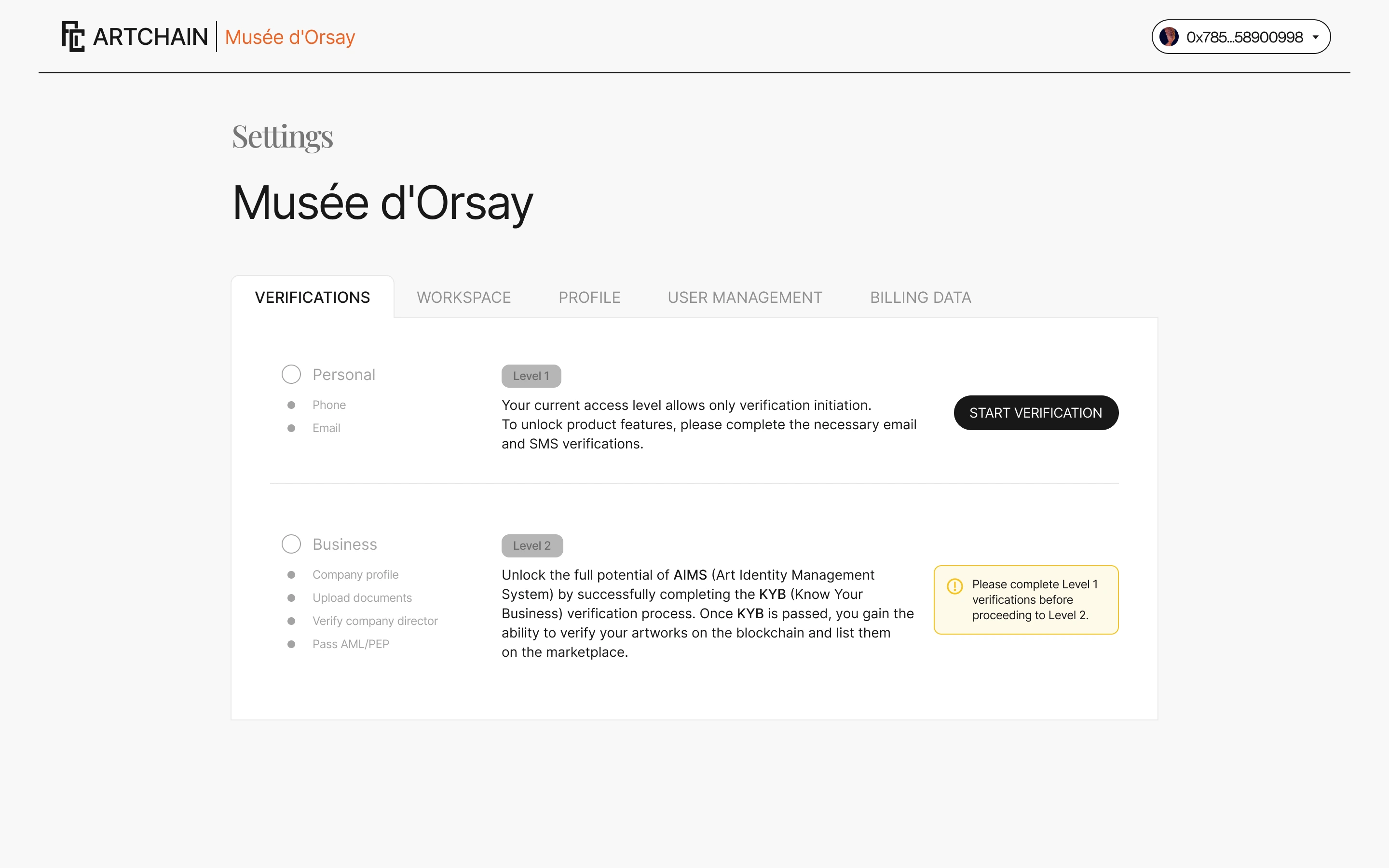
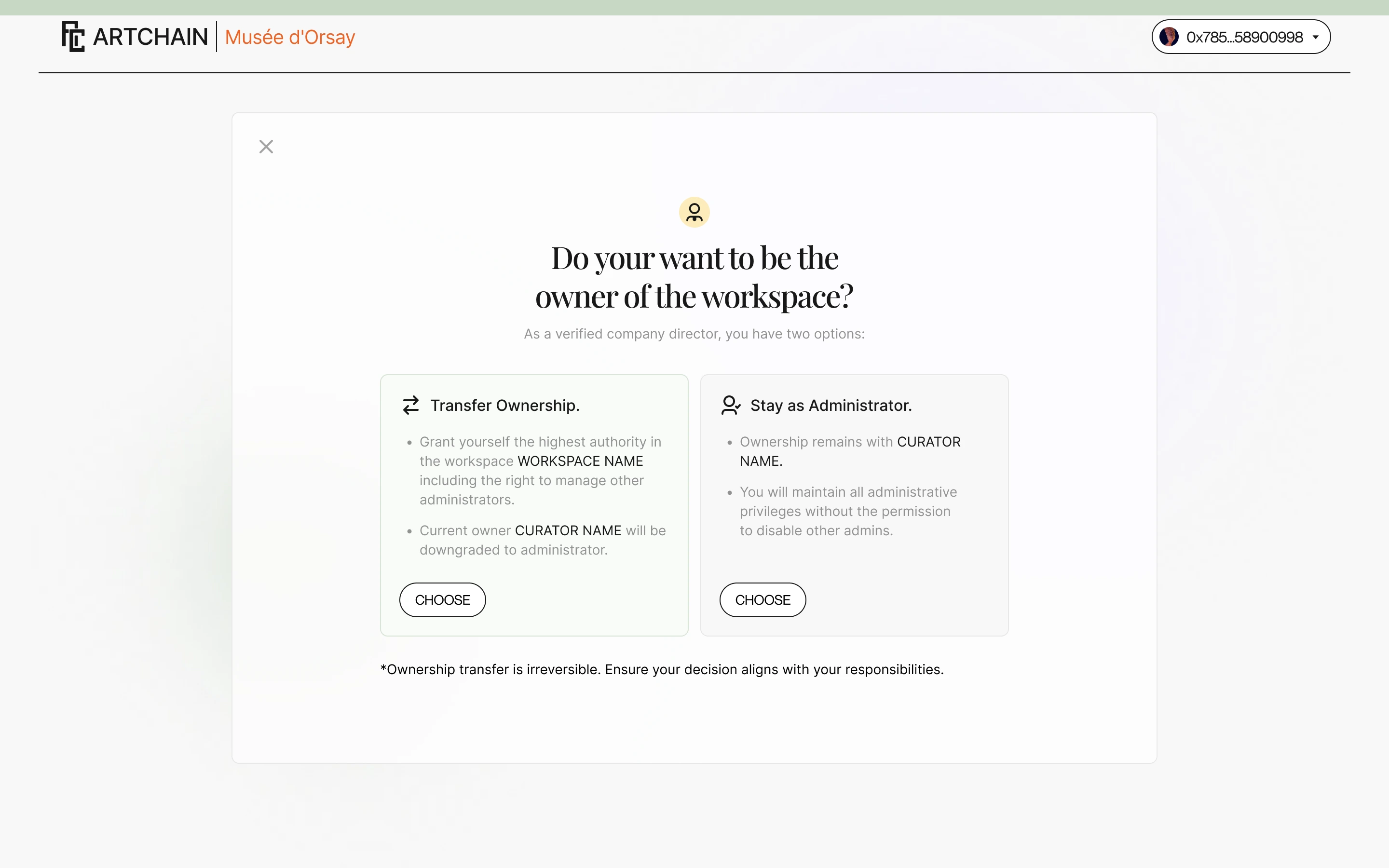
A new museum starts working right away. Level 1 — phone and email — unlocks the product; Level 2 — KYB for the company and KYC for its directors — unlocks blockchain records and the marketplace. Irreversible steps, like transferring ownership, say so before you commit.
Where trust pays off
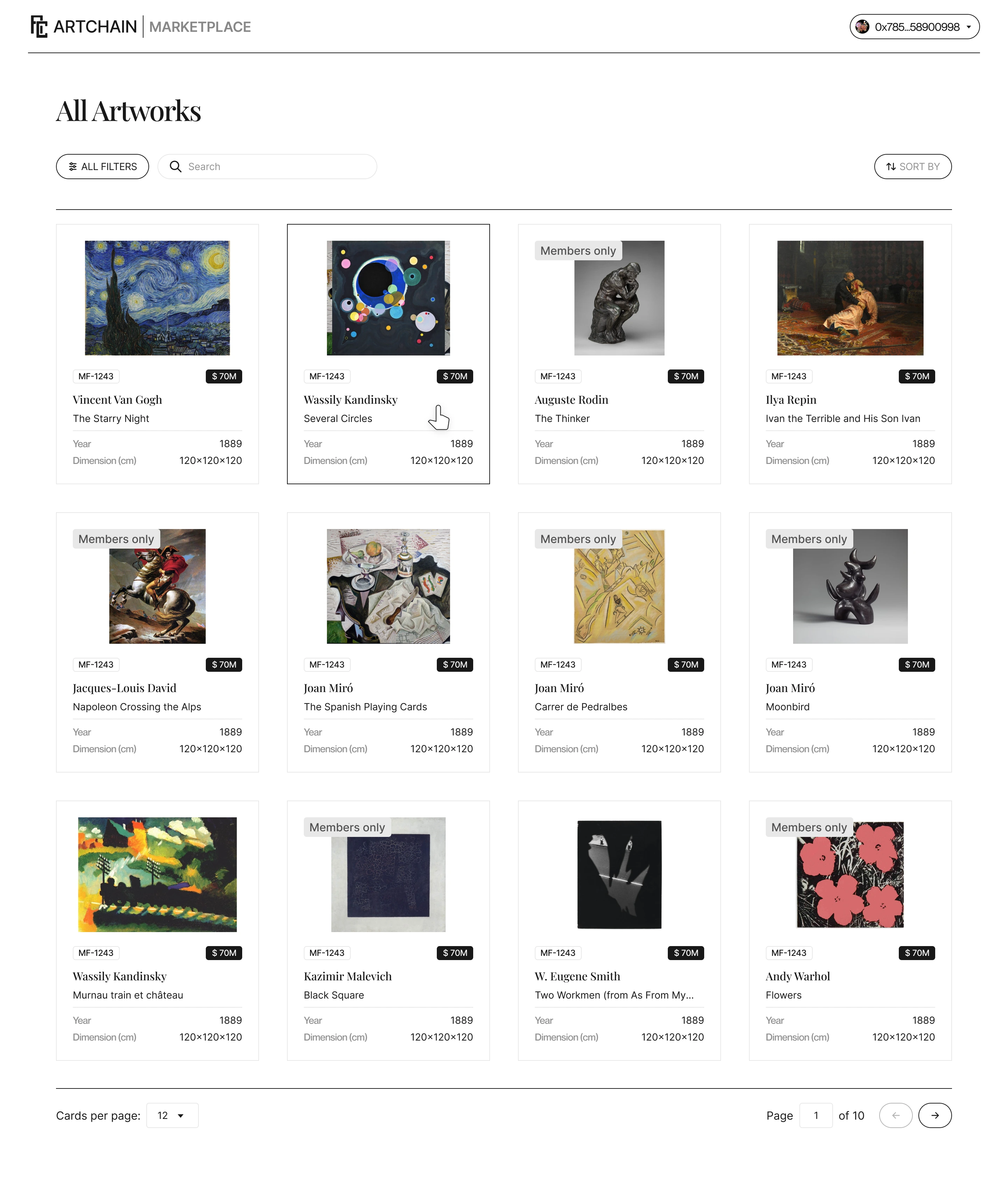
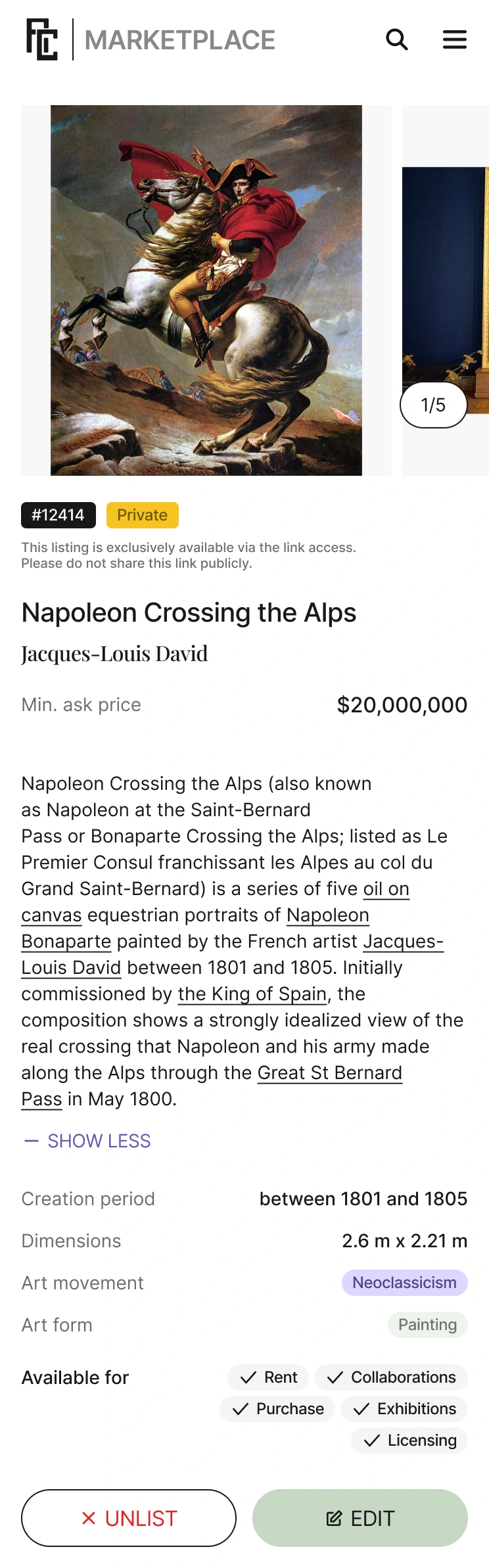
Everything verified behind the scenes surfaces on the artwork as a trust signal.
Design system
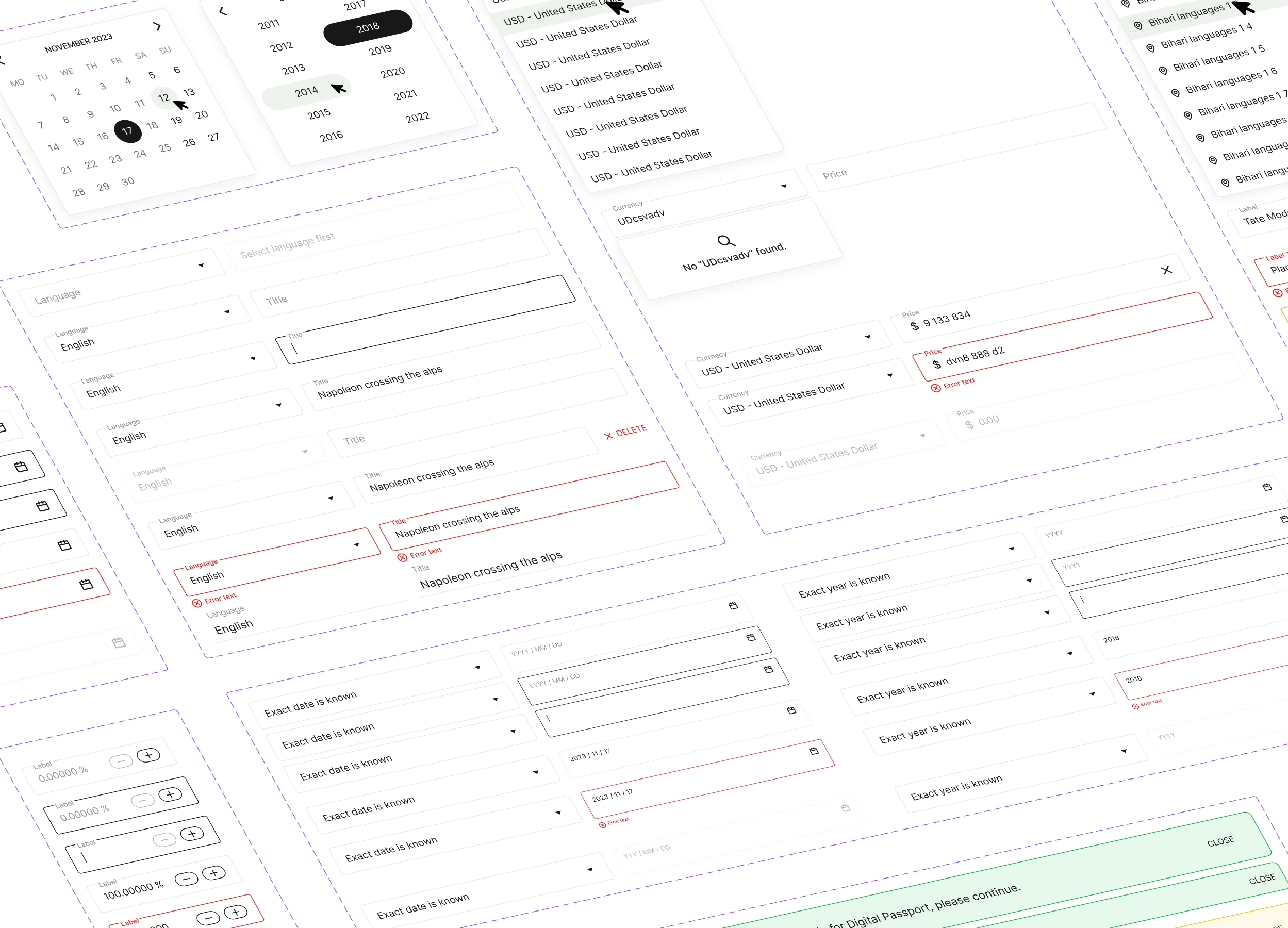
A shared component library keeps admin, verification and marketplace consistent — tables, forms, statuses and filters behave the same everywhere.
Outcome
Authentication moved from emails and calls to an auditable flow, with history in every passport.
Each person gets only the actions they are responsible for, so critical errors are harder to make.
Verified provenance reaches buyers as a clear signal on every artwork.


